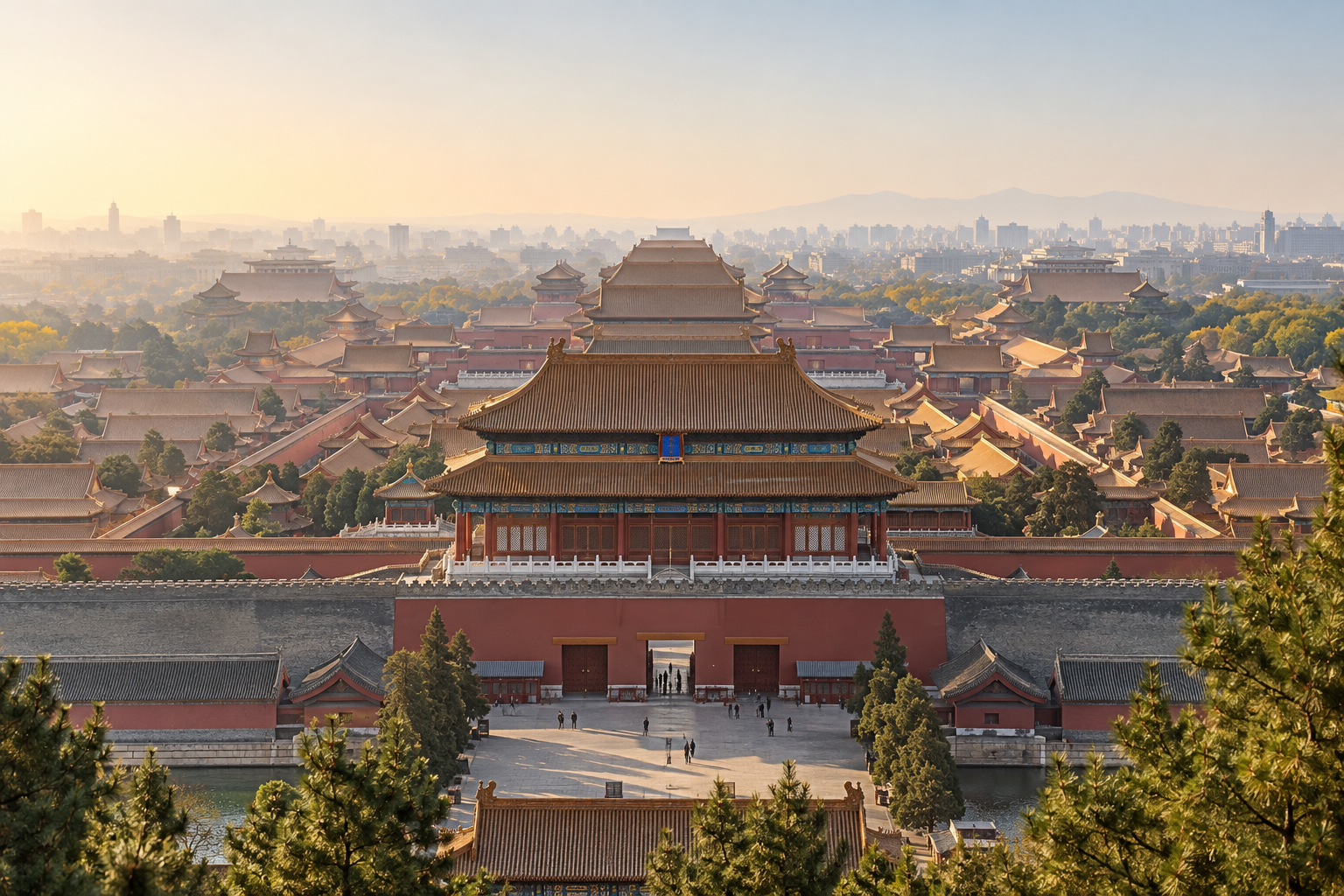
Planning a first trip to China can feel overwhelming. The country is vast, the distances are significant and every region offers a different experience.
A rewarding first journey does not need to include as many places as possible. It needs a clear route, enough time in each destination and a balance between celebrated landmarks and everyday local life.
Here are three practical ways to approach your first visit.
Start with one coherent route
China’s high-speed rail network and domestic flights make it possible to connect major destinations efficiently. Even so, changing hotels every night or two quickly becomes tiring.
For most first-time visitors, three destinations in ten to twelve days provide a comfortable balance. This gives you time to see the highlights without turning the journey into a race between railway stations and airports.
Choose your route according to what matters most to you:
- Iconic history and contrasting cities
- Nature and a slower countryside rhythm
- Family-friendly experiences
- Food and neighbourhood life
- A particular interest such as architecture, photography or hiking
The classic first journey: Beijing, Xi’an and Shanghai
For travellers who want an introduction to China’s history and modern life, Beijing, Xi’an and Shanghai form a natural first route.
Beijing: three to four nights
Beijing offers the strongest introduction to China’s imperial history. Allow time for the Forbidden City, the Temple of Heaven and a full-day excursion to the Great Wall.
The city becomes more memorable when its major landmarks are balanced with quieter experiences: walking through a hutong neighbourhood, visiting a local market or spending an unhurried evening around Houhai.
Three nights cover the essentials. Four nights allow a gentler pace and more room for local life.
Xi’an: two nights
Xi’an connects the journey to China’s ancient Silk Road history. The Terracotta Warriors are the headline experience, but the old City Wall, Muslim Quarter and local food traditions add valuable depth.
Two nights normally provide enough time for the Terracotta Warriors and a relaxed exploration of the historic centre.
Travelling from Beijing by high-speed train also creates a natural transition between the two ancient capitals.
Shanghai: three nights
Shanghai provides a striking contrast to Beijing and Xi’an. Historic architecture along the Bund faces the modern skyline of Pudong, while former concession neighbourhoods reveal a more intimate side of the city.
Allow time for a city walk, Yu Garden, the Bund and neighbourhood cafés or markets. Three nights offer a comfortable introduction without rushing.
This route works particularly well for a journey of nine to eleven days.
A family-friendly route: Beijing, Chengdu and Shanghai
Families often enjoy a route that combines famous landmarks with engaging wildlife, food and hands-on experiences.
Beijing introduces the Great Wall and imperial history. Chengdu adds giant pandas, Sichuan culture and a more relaxed urban rhythm. Shanghai finishes the journey with modern architecture, riverside views and family-friendly attractions.
A comfortable structure is:
- Three to four nights in Beijing
- Three nights in Chengdu
- Three nights in Shanghai
- Additional arrival or departure time where needed
In Beijing, choose a manageable Great Wall section and avoid overloading each day. In Chengdu, visit the panda base early and leave time for parks, teahouses or an informal cooking experience. In Shanghai, balance headline sights with a neighbourhood walk or a flexible family day.
Ten to twelve days works well for this route.
A slower nature journey: Guilin, Yangshuo and Longji
Not every first visit needs to focus on China’s largest cities. Travellers who value landscapes, village life and a slower pace may prefer southern China.
Guilin is the arrival point for the region. Yangshuo offers karst scenery, riverside countryside and opportunities for cycling, walking and locally arranged experiences. The Longji Rice Terraces add mountain landscapes and village stays.
This route is especially suitable for:
- Nature lovers
- Photographers
- Couples seeking a slower journey
- Travellers who have already visited large Asian cities
- Visitors who prefer fewer hotel changes
Seven to nine days allows time to experience the region without treating it as a short extension to a crowded itinerary.
It can also be combined with Shanghai or another international gateway when more time is available.
How many days do you need?
Seven to eight days
Focus on two destinations.
Beijing and Shanghai offer the clearest contrast between imperial history and contemporary city life. Guilin and Yangshuo work well for a quieter landscape-focused journey.
Ten to twelve days
Choose three main destinations.
This is the most comfortable length for Beijing, Xi’an and Shanghai or for a family journey through Beijing, Chengdu and Shanghai.
Fourteen days or more
Add depth rather than simply adding more cities.
Consider an extra countryside stay, a slower section in Yangshuo, more neighbourhood time in Shanghai or a side trip connected naturally to your main route.
Longer journeys are most rewarding when they include occasional free time and fewer early departures.
Which destination is right for you?
Choose Beijing for imperial landmarks, the Great Wall and traditional neighbourhoods.
Choose Xi’an for ancient history, the Terracotta Warriors and Silk Road heritage.
Choose Shanghai for architecture, contemporary China, food and neighbourhood walks.
Choose Chengdu for giant pandas, Sichuan cuisine and a relaxed local atmosphere.
Choose Guilin and Yangshuo for rivers, karst mountains and countryside experiences.
Choose Longji for rice terraces, mountain scenery and village life.
There is no requirement to visit every famous city on your first trip. The strongest route is the one that matches your interests.
Avoid an overloaded itinerary
A common planning mistake is adding another destination simply because it appears close on a map. Transfers involve packing, checking out, travelling to a station or airport and checking in again.
Before adding a destination, ask whether it contributes something genuinely different to the journey.
It is usually better to spend an additional day exploring a neighbourhood, meeting a local host or enjoying an unscheduled evening than to add another rushed city.
A well-designed itinerary should include:
- Realistic travel times
- A mixture of major sights and quieter experiences
- Occasional flexible periods
- Hotels chosen for location as well as comfort
- A pace suited to your group
Build your first China journey around you
The routes above are starting points rather than fixed packages. Hotels, experiences, transport and daily pacing can all be adjusted around your dates, interests and preferred comfort level.
Tell us how long you have, who you are travelling with and what you would most like to experience. We will shape a personal first journey through China without trying to include everything at once.
Share your ideas through our Plan My Trip form and we will help you choose the right route.