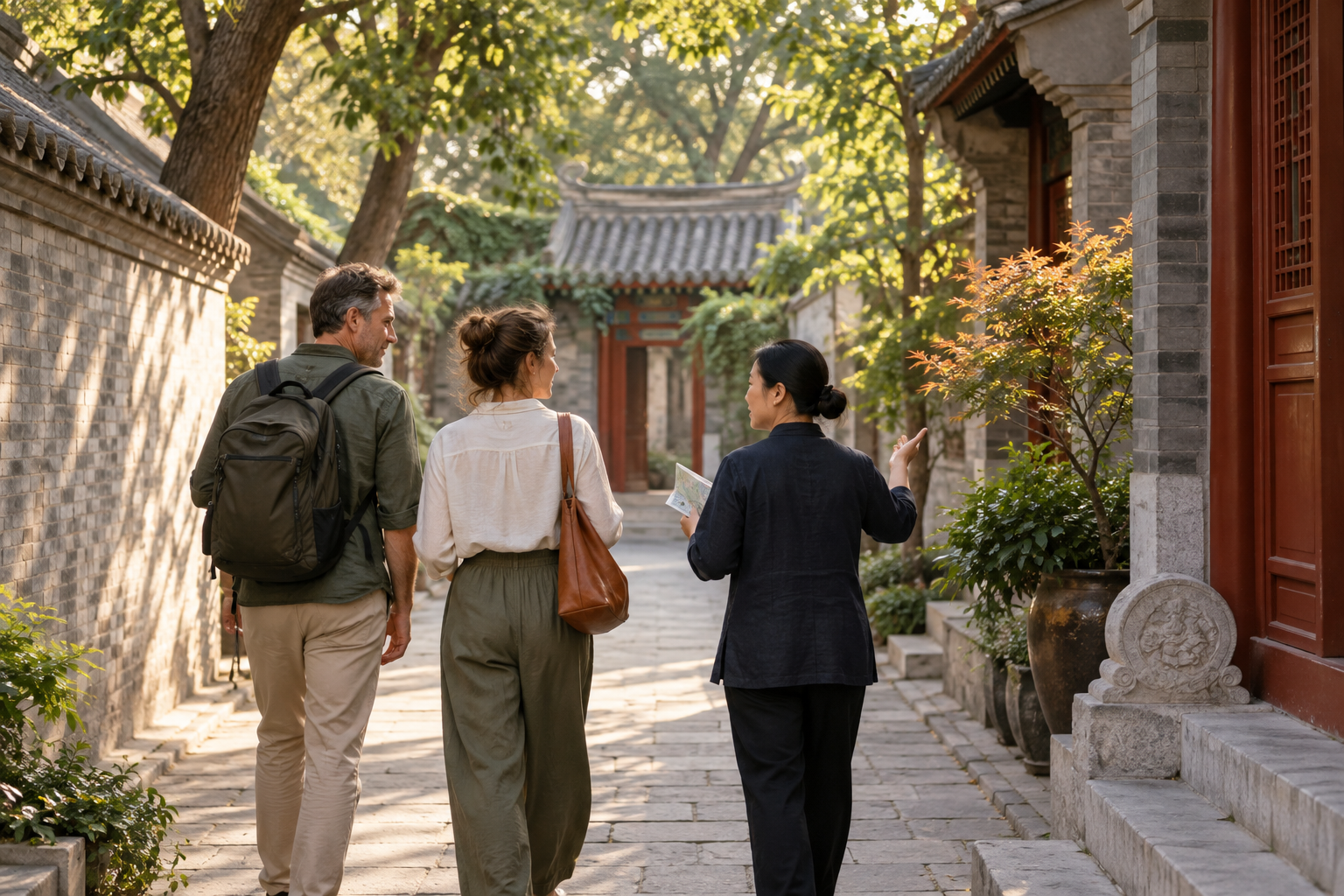
A private tour can be one of the most comfortable and rewarding ways to explore China. Instead of following a fixed group itinerary, you travel with a route, pace and level of support shaped around your own interests.
That flexibility is especially useful in a country as large and varied as China. Historic cities, mountain landscapes, rural villages and modern skylines can all form part of the same journey, but the right balance will be different for every traveller.
For some guests, a private tour means having a knowledgeable local guide and driver throughout the journey. For others, it means combining guided sightseeing with independent evenings, free days and carefully arranged transport between destinations.
The details can vary, but the purpose is the same: to make your journey feel personal, well paced and easy to enjoy.
The short answer
A private China tour is a journey designed for you and the people travelling with you.
You do not normally join a coach group or follow a standard departure date. Your itinerary can be adjusted around your available time, preferred destinations, hotel style, mobility requirements and the experiences that matter most to you.
Your final proposal should clearly explain the route, accommodation, transport, guided services, activities and meals that are included. It should also show which parts of the journey remain flexible.
The result is not simply a list of famous attractions. It is a practical travel plan that connects each destination comfortably and leaves enough time to experience it properly.
What “private” means
On a private journey, the main travel services are arranged for your own party rather than shared with a group of unfamiliar travellers.
Depending on the itinerary, this may include:
- A private English-speaking local guide
- A private vehicle and experienced driver
- Pre-arranged railway station and airport transfers
- Carefully selected hotels
- Reserved sightseeing and cultural experiences
- Support with domestic train or flight arrangements
- Local assistance during the journey
You may still use public high-speed trains or scheduled domestic flights when travelling between cities. The private element is the planning, support and ground arrangements surrounding those journeys.
Your guide can adapt the flow of a sightseeing day when practical. You might spend longer in a neighbourhood you enjoy, pause for photographs or choose a quieter lunch instead of being rushed back to a tour bus.
Designing your itinerary
Planning normally begins with a conversation rather than a fixed package.
A travel designer will want to understand when you hope to travel, how many people are in your party and how long you have available. It is also helpful to share the places you already want to visit and the kind of experience you would like the journey to have.
You might prefer:
- A classic first journey through Beijing, Xi’an and Shanghai
- A slower countryside route through Guilin, Yangshuo and the Longji Rice Terraces
- A family holiday combining history, pandas and interactive activities
- A food-focused journey with markets and regional cooking
- More time for photography, walking or cultural experiences
- A comfortable introduction to China with a relaxed daily pace
The first proposal is a starting point. Routes, hotel choices and the number of nights in each destination can normally be refined before the itinerary is confirmed.
Guides and local support
A good guide does more than explain historic facts.
Your guide helps you understand the places you are visiting, handles practical details and makes unfamiliar surroundings easier to navigate. They can introduce local customs, suggest suitable food and adjust the timing of the day when conditions change.
China’s major destinations may use different local guides rather than one guide accompanying you across the entire country. This allows each part of the journey to be led by someone with detailed knowledge of that region.
At railway stations or airports, transfers can be arranged so that you know where to go next. Clear meeting instructions and local contact details are particularly valuable when moving between several cities.
The level of support should match your preferences. Some travellers want a guide with them throughout each day, while others prefer guided mornings followed by independent time.
Transport between destinations
China’s transport network makes it possible to combine very different regions within one journey.
High-speed trains are often a comfortable option between major cities. They allow you to see more of the landscape and usually take you from one city centre to another without a long airport transfer.
Domestic flights can be more practical when destinations are far apart or when travelling to areas not conveniently connected by rail.
Private vehicles are generally used for airport and railway transfers, sightseeing days and journeys into the countryside. The appropriate vehicle depends on the number of travellers and the amount of luggage.
A well-designed itinerary does not simply choose the fastest transport. It considers departure times, station locations, hotel check-in and how much energy you will have left for sightseeing after arrival.
Hotels and room choices
Accommodation has a major influence on how a journey feels.
A central hotel can reduce daily transfer time and make it easier to explore independently in the evening. A countryside guesthouse or boutique property may provide more character, but access and facilities should also be considered.
Before confirming your trip, share any preferences relating to:
- Hotel category and budget
- Twin or double beds
- Connecting or family rooms
- Extra beds for children
- Step-free access or lifts
- Quiet rooms
- Breakfast requirements
- Boutique or international-style hotels
Hotel standards and room sizes vary between destinations. Your proposal should identify the planned properties or explain the standard and location being recommended.
What is usually included
Every proposal is different, so the final inclusion list should always be checked carefully.
A private China journey commonly includes a combination of:
- Private English-speaking local guides
- Private transfers and sightseeing vehicles
- Accommodation with daily breakfast
- Entrance fees for listed attractions
- Activities specifically named in the itinerary
- Domestic train or flight arrangements when stated
- Local planning and support
Some meals may be included when they form part of an experience, such as a cooking class or a planned regional dinner. Other meals may remain open so you can choose according to your appetite and interests.
International flights, travel insurance, visa costs, personal purchases, optional activities and meals not listed in the proposal are commonly handled separately.
The final itinerary and quotation should make every inclusion and exclusion clear before you book.
How flexible is the journey?
Flexibility begins during the planning stage.
You can adjust the balance between sightseeing and free time, change the number of nights in a city or replace an attraction with an experience that better suits your interests.
Once the journey has begun, guides can often make small changes to the order or pace of a day. Larger changes may depend on ticket availability, transport reservations, hotel conditions and opening times.
It is helpful to mention important needs early. These may include limited walking ability, dietary preferences, young children, special celebrations or a strong interest in a particular subject.
The more your travel designer understands about you, the more naturally the itinerary can be shaped around your party.
What affects the price?
The cost of a private tour depends on much more than the number of days.
Important factors include:
- Travel season and exact dates
- Number of travellers
- Hotel category and room requirements
- Distance between destinations
- High-speed train or domestic flight choices
- Vehicle size
- Number of guided days
- Entrance tickets and private experiences
- Special arrangements or premium services
Travelling as a family or small group can reduce the per-person cost of guides and vehicles because those services are shared within your own party.
A sample price can be useful for initial comparison, but an accurate quotation requires your dates, group size and preferred accommodation level.
Who is a private tour best for?
Private travel can work especially well for:
- First-time visitors who want reliable local support
- Couples seeking a more personal journey
- Families needing a practical and flexible pace
- Multi-generational groups with different interests
- Travellers with limited time
- Guests celebrating a birthday, anniversary or honeymoon
- Travellers who prefer thoughtful planning without joining a large group
It can also suit experienced independent travellers who only want assistance with the more complicated parts of the journey. A private tour does not have to mean being guided every minute of every day.
The right arrangement may combine structured sightseeing, independent exploration and free time.
From first enquiry to confirmed journey
The planning process usually follows a few simple stages.
First, share your preferred dates, group size, interests and any destinations already on your list.
Next, your travel designer prepares an initial route and proposal. This gives you something concrete to review, including the suggested pace, accommodation and major experiences.
You can then discuss changes. The itinerary may be refined until the route and service level feel right.
Before booking, review the final price, payment terms, cancellation conditions and inclusion list. Names and passport details may be required for transport and attraction reservations.
After confirmation, you should receive practical information explaining the next steps and what to prepare before departure.
A journey built around you
The best private journeys feel organised without feeling restrictive.
Important reservations and transfers are taken care of, while the itinerary still gives you space to notice local life, enjoy an unexpected conversation or slow down when a place deserves more time.
At Wandorld, every proposed journey begins with your dates, interests and preferred pace. We use those details to create a thoughtful first plan, then refine it with you.
Ready to start planning? Share a few ideas through our Plan My Trip form, and we will shape them into a personal China journey.